

Site Lines Foreword
by Damon Krometis
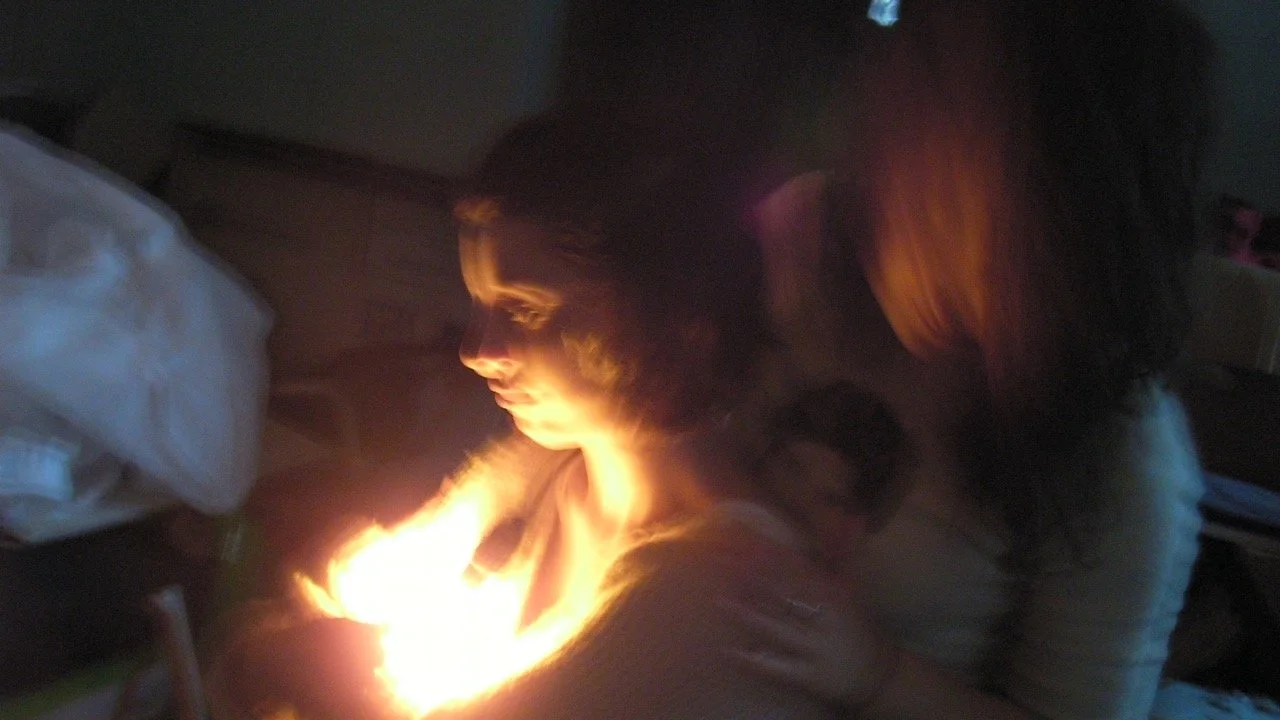
In 2011, I entered the MFA Directing program at Northwestern University looking to find something missing in the work I was creating. Then, about eight weeks into my time there, I found myself collaborating with an MFA Playwriting student named Chad Eschman to devise a site-specific play in a creepy basement storage room in Evanston, IL. Working with a team of undergraduates, we created a play based on women’s testimony about their pregnancy dreams. There is one image from the play that's seared in my memory: a performer swaddling a bare light bulb in a cloth, transforming it into a luminous baby. Amidst the musty odor of that brick basement, the dust drifting in the air, that baby seemed magical—a beacon of hope in an abyss. Seeing how that basement became an antagonist in the play, I knew I’d found that missing ingredient. And I knew then that I would be doing work like this with people like Chad for the rest of my life.
What makes site-specific theatre so unique and exciting is that the story is meant to happen there. You choose a site and make something that embraces its architecture, its neighborhood, its history. Something is missing if you do the play somewhere else. In one of my favorite site-specific plays, Kevin Buys a Chair, there's a line of dialogue about a decorative ceramic pig that still sticks with me. I’ll never forget what it was like drinking a beer with veterans at an American Legion before watching Thou Proud Dream, my and Jenni Lamb’s adaptation of Henry V on the Legion’s patio. The site becomes a character, or perhaps something more. As Nick Kaye says in his study on site-specific art, something amazing “arises in the uncertainties over the borders between work and site” so you can’t be sure if the site inspires the art or the art transforms the site. (1)

Yet, I believe the blending of work and site is only part of the equation. The audience completes the triangle, creating an interaction between spectator, site, and play that produces some third (or maybe fourth) thing. There is no one way this interaction goes. Every audience member brings a different set of connections and memories to a site. Every site has its own spirits. So, to be successful, site-specific work takes an extra layer of care and research. This is what Second Site does so well.
Since that creepy basement, I have had the pleasure of working with the artists featured in this volume to respond to the eccentricities of myriad sites and conduct this alchemical process. Every production we created started from the site and worked outward. We asked ourselves: What possibilities did the site hold? What kinds of stories/moments/events could only happen here? What could be said here that might resonate in new and surprising ways? How could we frame and support the audience to lose themselves in these worlds?
“Every production we created started from the site and worked outward. We asked ourselves: What possibilities did the site hold?”
I could not be happier that Second Site has grown organically from many of these collaborations into the collective represented here. Site Lines: A Second Site Anthology showcases the decades of experience these brilliant people have creating site-specific theatre and performance across the country. Their work is a testament to the endless variety that site-specific performances can provide both artists and audiences.
In Night Lights, you will read plays designed for domestic spaces that have embraced proxemics to bring audiences cheek-to-cheek with characters’ flaws and insecurities. In XV, you will see how site-specific plays designed for a church hall can dissect how we form community. In A Night With You, you will find plays set in a museum that challenge how we write histories and frame social norms. And in The Beauty Project, you will see how short plays set in a salon can disentangle beauty and self-care.
I hope that encountering these works will be as inspiring to you as it always has been for me. Maybe they drive you to find your own glowing baby, your own eccentric pig, your own site where this—whatever this may be—can only happen here.
(1) Nick Kaye, Site-Specific Art: Performance, Place and Documentation (Routledge, 2000), 215. Quoted in Joanne Tompkins, “The ‘Place’ and Practice of Site-Specific Theatre and Performance,” in Performing Site-Specific Theatre, ed. Anna Birch and Joanne Tompkins (Palgrave Macmillan, 2012), 1.
Damon Krometis is an Associate Professor and Theatre Coordinator at the Community College of Baltimore County. He has created site-specific work in New York, Chicago, Boston, Baltimore, and Washington, DC. He is a scholar of immersive theatre and ethics, and has been published in Theatre Topics, The Journal of Dramatic Theory and Criticism, and HowlRound Theatre Commons. He holds an MFA in Directing from Northwestern University.
Where to?
Continue exploring Site Lines