

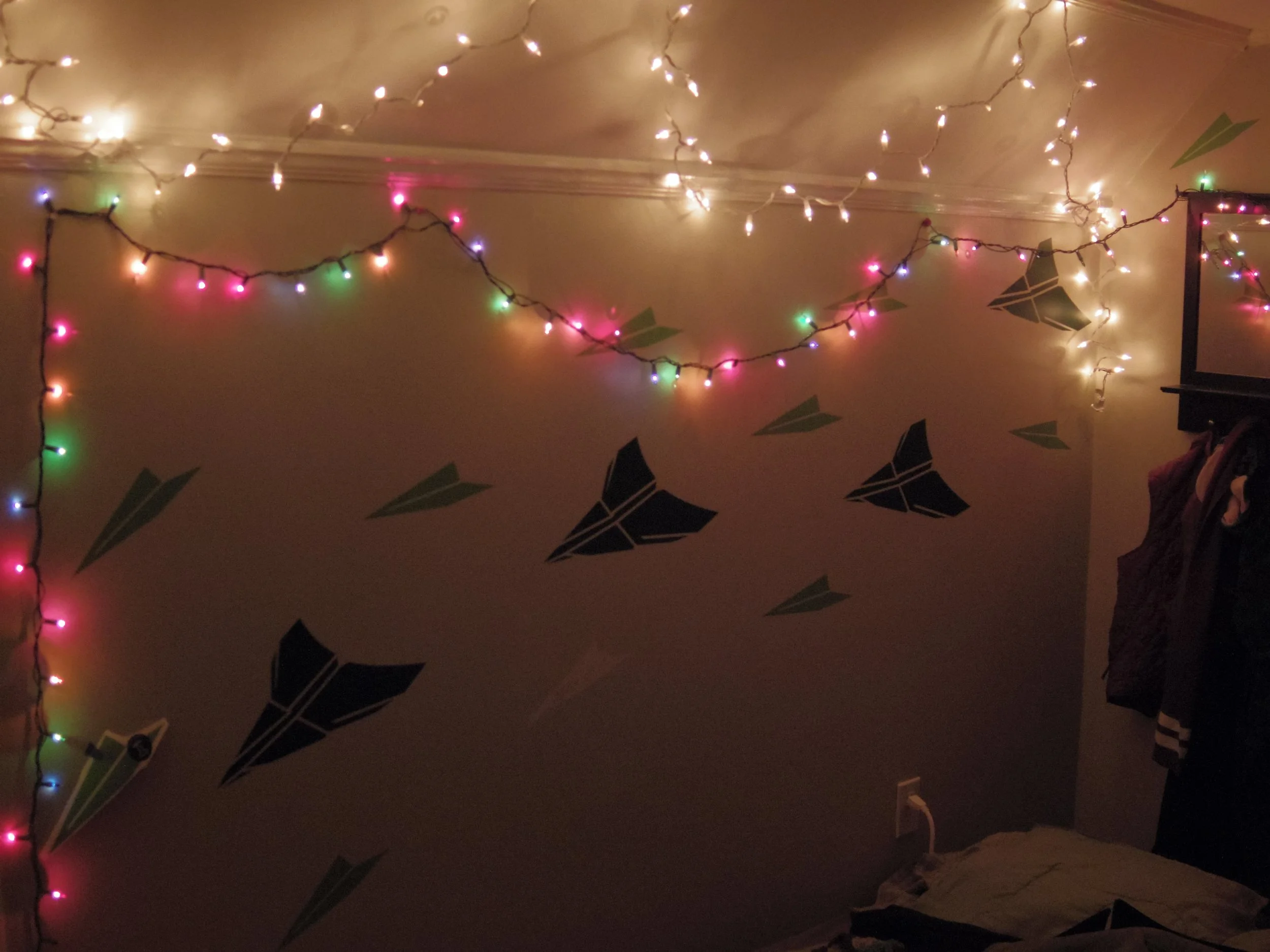
Tell Me What This Place Is
by Jessy Lauren Smith
Some people find it easy to make a home. To feel like a space belongs to them. I’ve never been particularly good at it.
I’ve lived in more buildings than I can count, with a long series of roommates (friends, family, strangers I met on Craigslist). In every configuration, my instinct has been to shrink myself down to the size of my bedroom.
In 2013, I moved out of an apartment/illegal music venue in Lakeview into a much more normal place in Lincoln Square. My new apartment was small but two-storied—the sort of Chicago building where a larger home seems to have been split into separate Tetris pieces, with “front doors” now shooting out every side of what was once most likely a multigenerational family home.
I had two roommates, nice strangers who had lived there longer and stayed home a lot and seemed more comfortable taking up space. Another family lived downstairs from us, whom I did not meet. I spent most of my time upstairs in my room, or out of the house entirely.
When I was out, I was often with my friends from Living Room Playmakers. Chad Eschman, Jenni Lamb, Erin Lekovic, Jennifer Rumberger, Tony Werner, and I had all gone to grad school at Northwestern and united over our shared interest in making theatre in unusual spaces—partially because it was inviting to non-theatre-people and partially because it was cheap and we had just spent all our money on grad school.
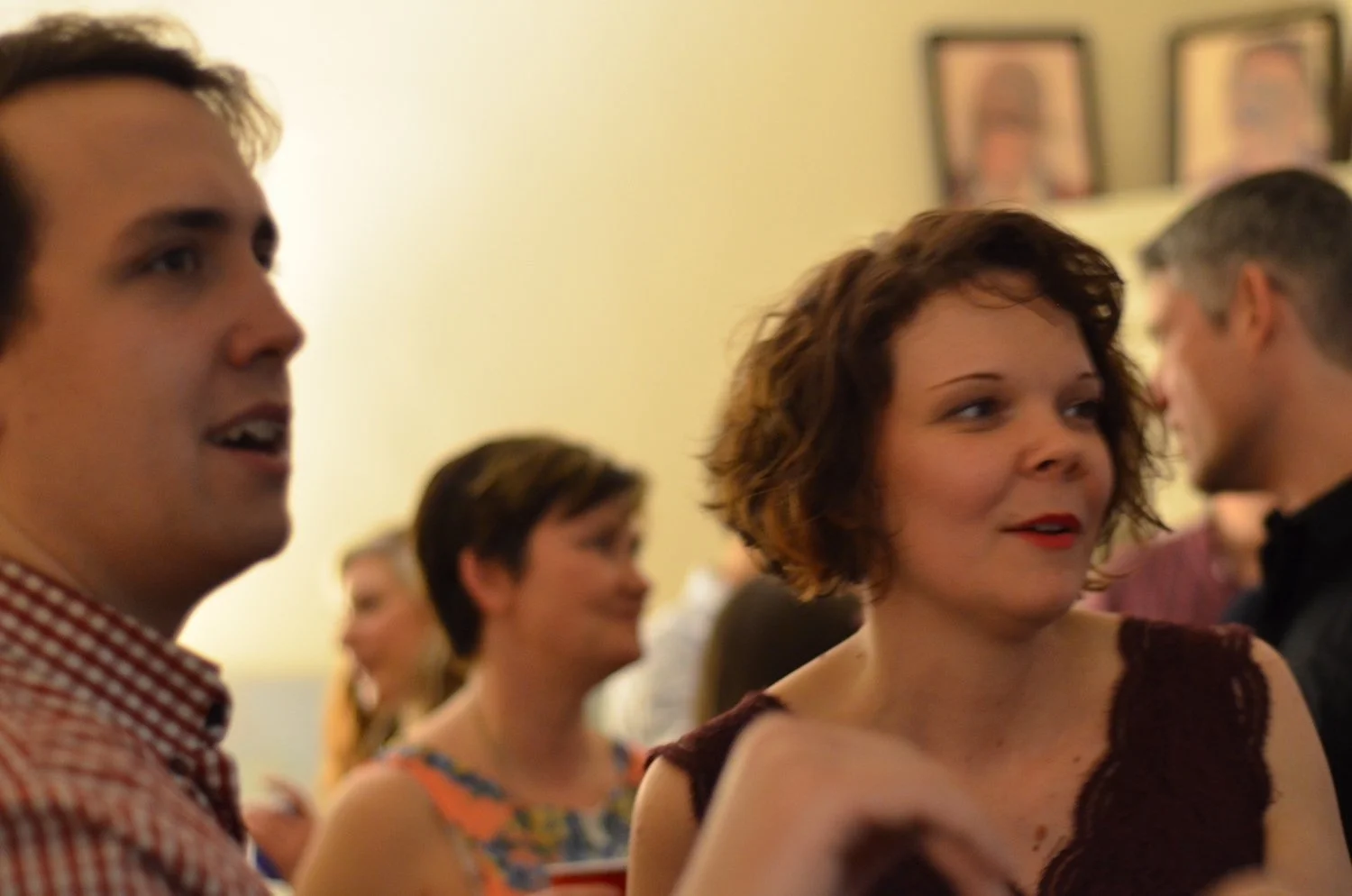
It was our first year as a collective and we had already done two shows, but we were young and energetic and wanted to do another one. We just weren’t sure what it was yet, because the space had to come first.
But we kept meeting, and my new apartment had a vintage, gold, wrap-around couch in the living room, so we started having some of our meetings there. Having people over made the place feel a little bit more like mine. And if it was mine, well, the next step was obvious: Staging a series of plays, for a paid audience, in my bedroom.
Come over, and make something.
Erin and I came up with the concept, I think. Very short plays, set in a bedroom, with a holiday party ongoing downstairs. We’d bring up ten audience members at a time, to watch 30 minutes of theatre, standing squished against one wall of my tiny bedroom. In the meantime, downstairs, there would be mingling and dancing.
My playwright friends start to come over more often. And in this house that is not yet mine, we come up with stories of what could happen in this bedroom. Breakups. Brothers. Magic. Monsters. Loneliness. Love.
With the help of director Katy Walsh, we choose concepts and start writing. We string holiday lights through my house and stay up late rolling tiny, printed programs of the event into handmade Christmas crackers. Chad and Jennifer learn to play carols on the ukulele. Three actors playing all the roles run through the house, wearing horse masks and matching pajamas and tuxedos. Jenni Lamb makes a big pot of vegetarian chili, and we all eat it together on my living room floor at the end of tech.
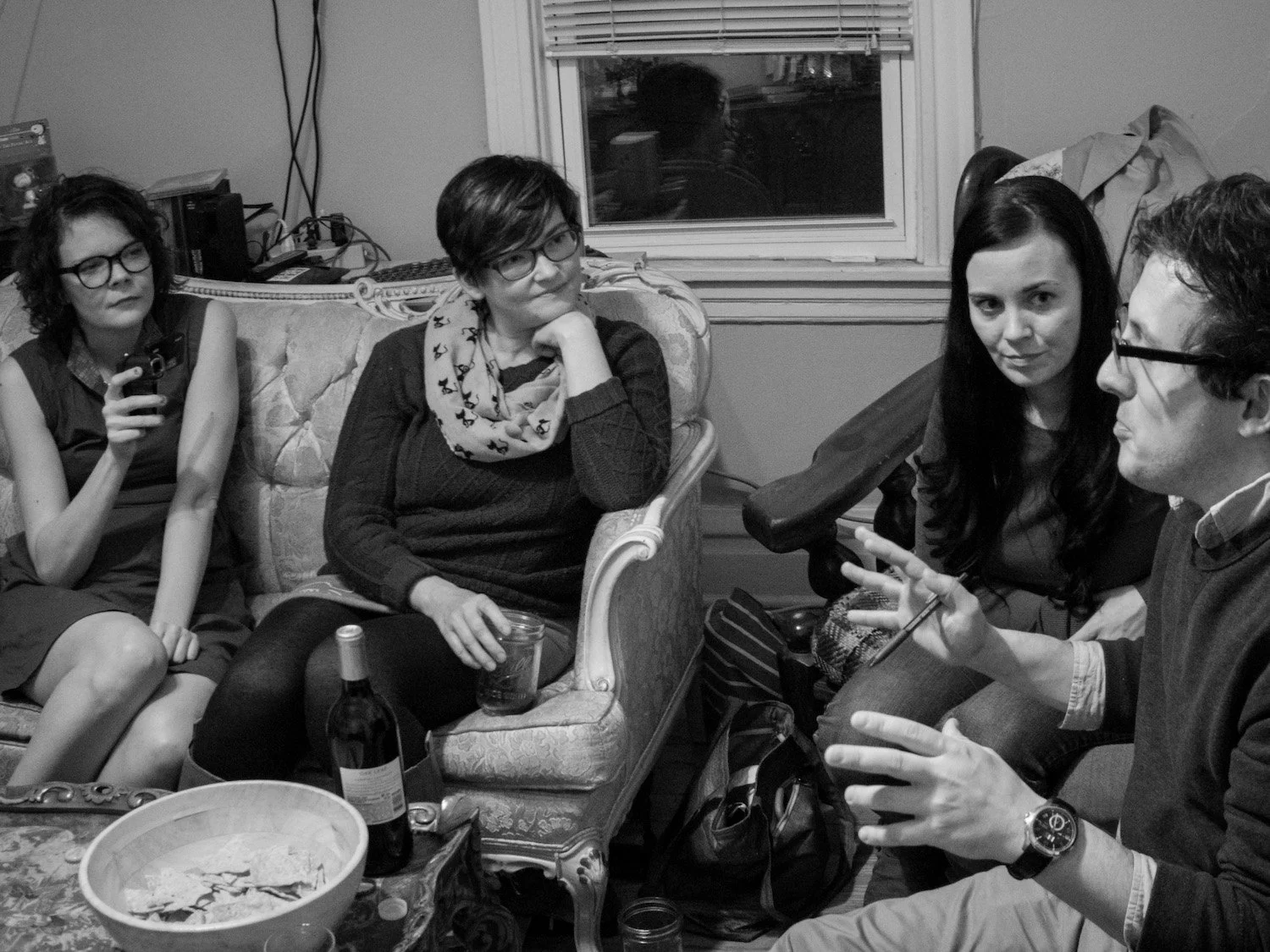
Come over, and tell me what this place is.
The day of the first show, there is a snowstorm. The winding walkway to my apartment, and the outside stairs that lead to my front door, are both covered with snow. Erin and I both grew up in Florida, but we figure out how to shovel snow anyway. We salt the walk. Someone buys a tarp where the audience can leave their shoes. Jennifer makes a sign out of plywood and duct tape and blue Christmas lights that spell out “FOLLOW THE LIGHTS.” We hang that on the front gate, so you know you’re in the right place.
For an audience member, the evening goes like this: There are three groups. When your group is called, you go stand at the base of the stairs, and listen to a couple of ukulele carols. We hand out the Christmas party crackers, give a little curtain speech, and then count down with you: 1, 2, 3, and—everyone pulls the ends of the crackers, confetti flies… and inside the cracker, you find a little rolled-up program.
And up the stairs you go, to watch what we’ve imagined could happen there.
Thirty minutes later, you go back downstairs to join the fray of socializing and cheap wine, and another group of audience members pops open their programs and trots up the stairs together.
After every group has seen the plays, Jennifer and Chad abandon the carols and begin to drum their hands on the living room floor, singing Lorde’s “Royals” acapella. And then the dance party begins in earnest.
Fancy Chicago theatre actors tell us the plays were “actually really good” in a tone of surprise that is probably warranted but makes me less confident in their acting skills. I finally meet my downstairs neighbors, when they come up to complain about the noise. My bed frame has been broken by a stunt. I feel happier than I’ve felt in a long time.
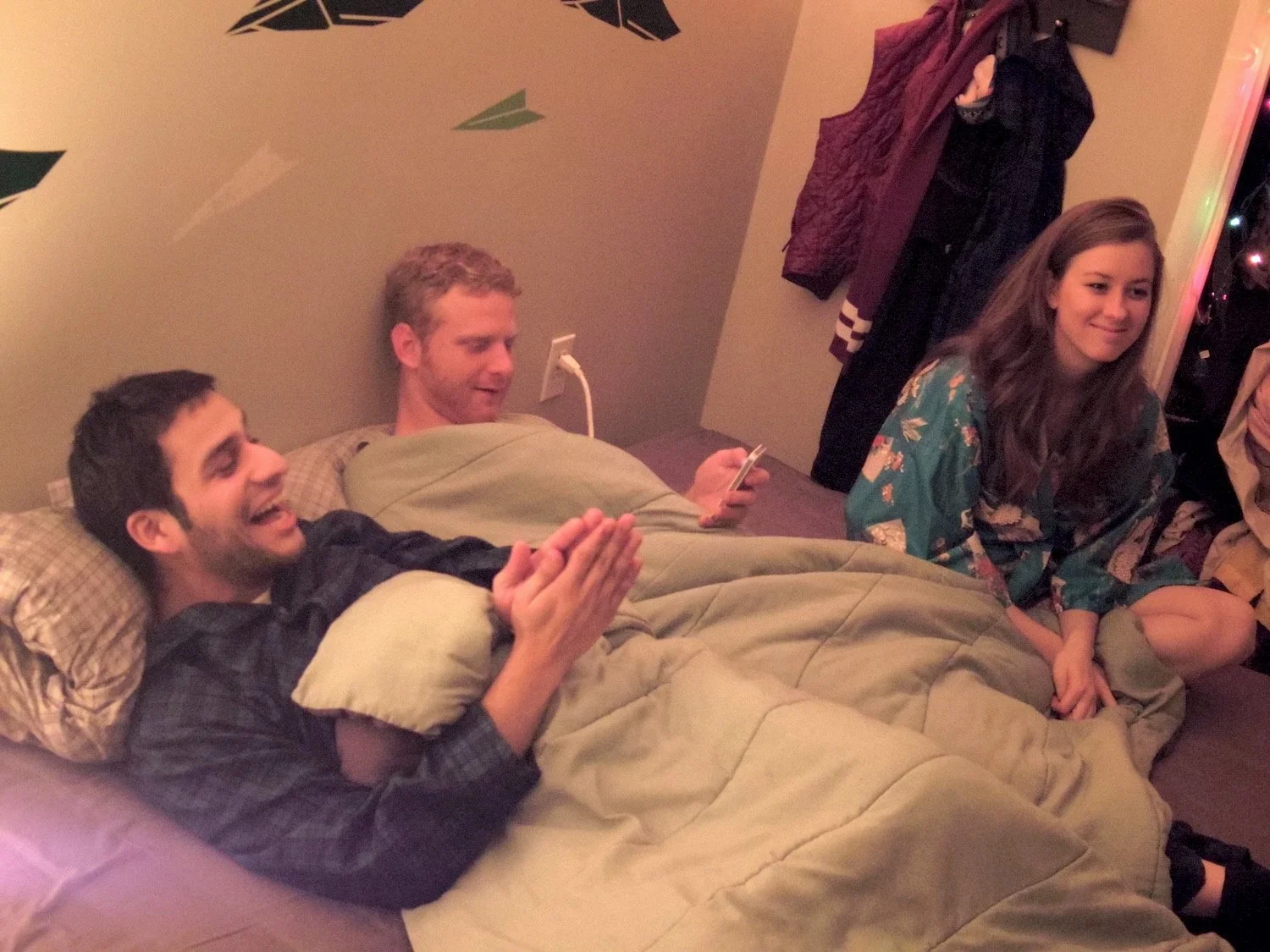
Come over, we’re waiting for you.
I was always trying to think, as a maker of site-inspired theatre, about the ways we could give our audience more of a feeling of ownership, of the space, of their experience. I didn’t want them to feel like they had to be a theatre expert to enjoy what we made. I wanted them to feel like this was made for them. Like they were necessary.
I didn’t realize until years later how badly I wanted that for myself too. How putting on a play in my apartment made it feel just a little bit more like it belonged to me.
Surely I must have some authority over the place, if I can open the door and say, “Come in.”
In the days after the show, when I wake up in my broken bed and look around the apartment, it’s still maybe not quite a home but it is a place where I have been part of something. My friends have cried and danced and thrown up here. I’ve had to talk to the cops. I’ve gotten confetti into corners it will never quite come out of. I’ve made stories, here, with people I love.
Some of them are even true.
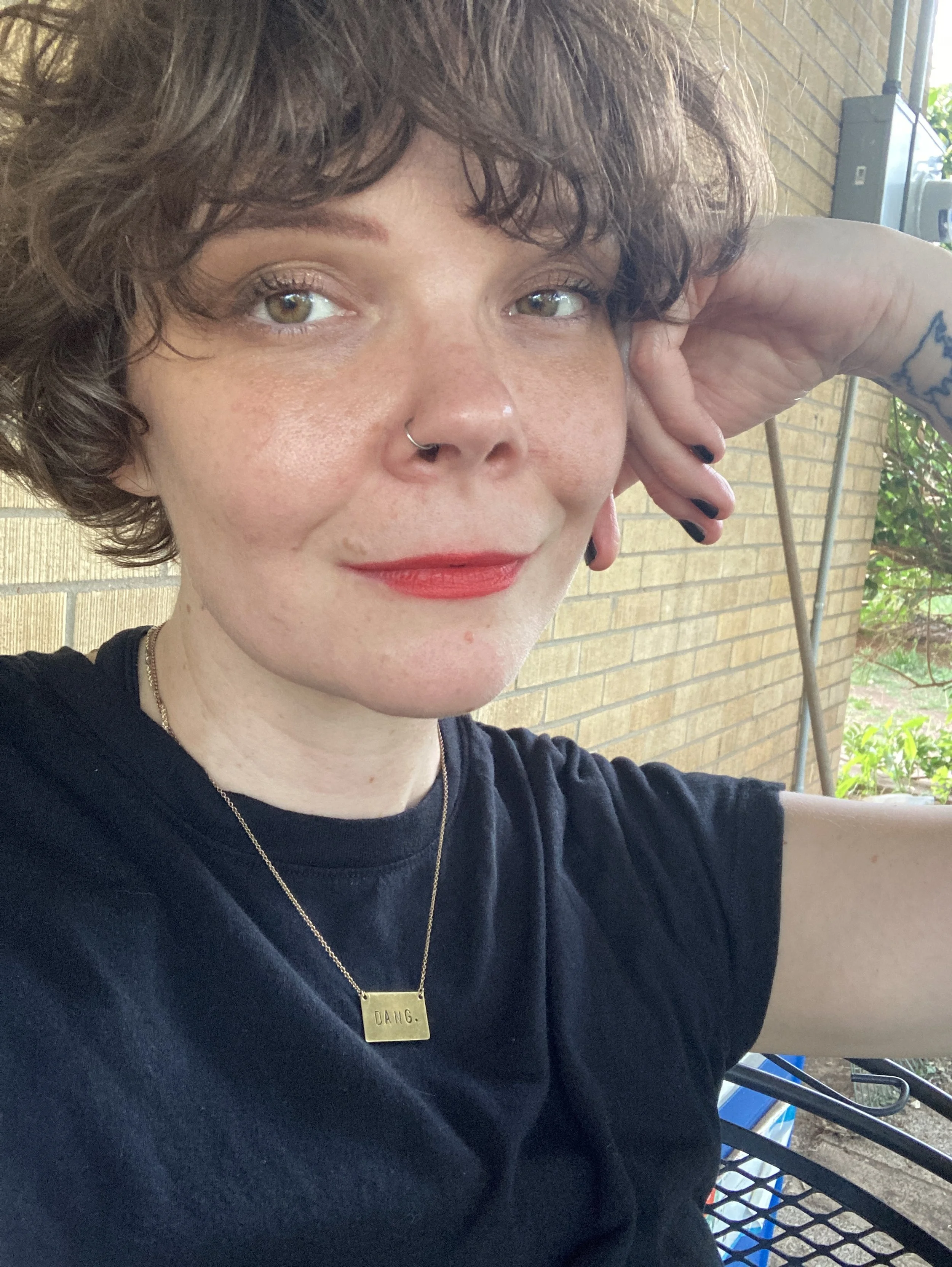
Jessy Lauren Smith is a writer, producer, and claymation enthusiast currently based in some combination of Chicago and LA.
Where to?
Continue exploring Site Lines